
This multi-jurisdictional hazard mitigation plan has been completed in accordance with Section 322 of the Robert T. Stafford Disaster Relief and Emergency Assistance Act, as enacted by Section 104 of the Disaster Mitigation Act of 2000. The guidelines for the completion of this plan appear in the Code of Federal Regulations (CFR) under Title 44: Emergency Services, Part 201.6. The West Virginia Division of Homeland Security and Emergency Management (WVDHSEM) further monitored the planning process. Funding for the project was distributed by the WVDHSEM under the Flood Mitigation Assistance (FMA) program.

The county-level emergency managers for Marshall, Ohio, and Wetzel Counties acted as the lead agencies for the completion of this plan. Each county contracted out the completion of their own, individual update and jointly agreed that the contractor would consolidate the individual documents into a regional plan; the plan was completed between May, 2008, and February, 2011.
The Marshall, Ohio, and Wetzel Counties Multi-Jurisdictional Hazard Mitigation Plan is considered “multi-jurisdictional” for several reasons. In addition to the three (3) county governing bodies, all 16 municipal governments located within the counties participated in the data compilation and action plan development through the efforts of individual county emergency managers. All municipalities are represented by at least one (1) project in the action plan. Further, all participating government entities formally adopted the plan by resolution.
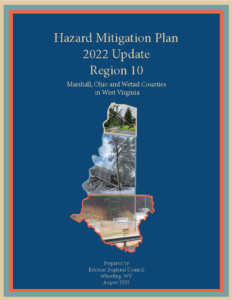
Marshall, Ohio and Wetzel Counties Multi-Jurisdictional Hazard Mitigation Plan Update
(Final – March 2023)
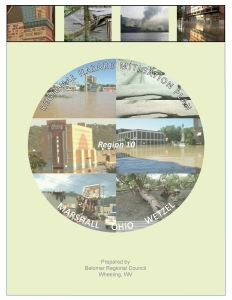
Marshall, Ohio and Wetzel Counties Multi-Jurisdictional Hazard Mitigation Plan
(Final – July 2017)